Reservation
Buddha Zen Hotel Chengdu
Buddha Zen Hotel Chengdu is located in the Manjusri square scenic spot within the first ring road, close to Tianfu Square, Hongxing Road Pedestrian Street and Chunxi Road Pedestrian Street, surrounded by Manjusri courtyard, one of the eight jungles in China and other tourist attractions, with convenient transportation and fast travel.
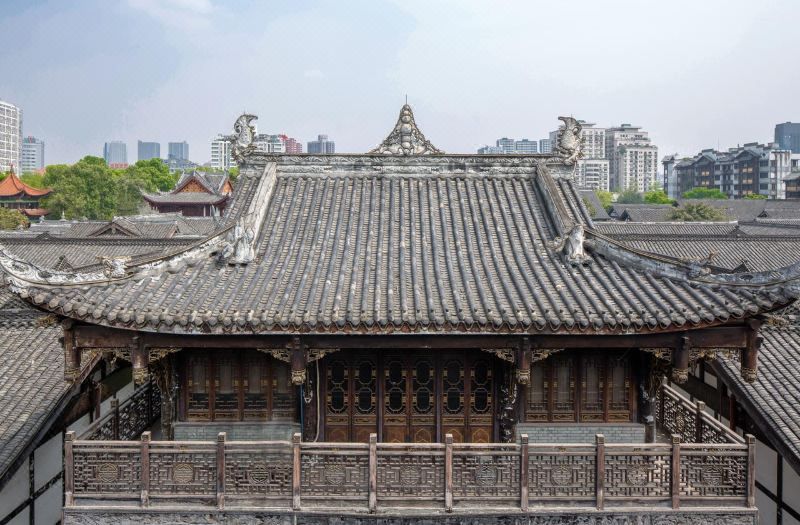
The inn fully combines the traditional Chinese aesthetics and creates the artistic conception of Zen; Let you in the hustle and bustle of urban civilization, find quiet Zen. The hotel has a simple style, exquisite decoration, various elegant guest rooms, tea house, restaurant and spa center. Living in it, you can feel the profound and gaming Buddhist culture.
Breakfast time: 07:00-09:30
FAQs
Show more
How far is the hotel from Chengdu Shuangliu International Airport?
Buddha Zen Hotel Chengdu is 16km from the airport.
Does Buddha Zen Hotel Chengdu offer airport shuttle service?
Yes, please contact us with flight number to arrange it after booking a room.
What are the check-in and check-out time at Buddha Zen Hotel Chengdu?
Check-in time is from 14:00, and check-out time is until 12:00 at Buddha Zen Hotel Chengdu.
Does Buddha Zen Hotel Chengdu have a pool or gym?
No, The hotel has no pool and fitness room. See details about other facilities on this page.
Does Buddha Zen Hotel Chengdu have a restaurant?
Yes, you could have a meal in the hotel.
Does Buddha Zen Hotel Chengdu offer internet or wifi?
Yes, please request it when you check in the hotel.
Does Buddha Zen Hotel Chengdu accept prepaid room charge?
Yes, please contact us after submitting a reservation.
Does Buddha Zen Hotel Chengdu accept credit card payments?
Yes, VISA Master AMEX JCB could be accepted.
How much is the breakfast at Buddha Zen Hotel Chengdu?
Each costs cny48 for extra breakfast.
How much does it cost to stay at Buddha Zen Hotel Chengdu?
The room prices is from cny460, but it may vary depending on your stay(e.g. dates, room type etc.).
Travelogue
Notes on Three Days of Residence in Wenshu Lane
Day 1 | First Encounter: Slow Entry in Sandalwood Fragrance
Landing in Chengdu, exit from Exit K of Wenshuyuan Station on Metro Line 1, walk for about five minutes and turn into an alley. The vermilion carved wooden door is half covered, with the three characters "round and round" hanging on the lintel. When the door was pushed open, the copper bell rang lightly, and the receptionist clasped her hands together and said eleven sentences of "Amitabha Buddha", which was more gentle than "Welcome". Buddha Zen Hotel Chengdu is composed of two Qing Dynasty twin well courtyards, with gray tiles and white walls, wooden columns and corridors. Looking up, you can see the traditional "twin well" courtyard for natural lighting, and the sound of the city is immediately blocked outside the door. Because there was no elevator, the concierge took the initiative to carry the 24 inch suitcase (psychological construction in advance), and the "Bruce Lee" at the front desk handed the tartary buckwheat tea and drew a simple picture: Wenshu Hospital at 05:30 in the morning, Xiangyuan Vegetarian, Chen Mapo tofu, and it was safer to go to Jinsi Street at night. Stay in the Zen Joy King size bed (with balcony), approximately 25 square meters, with solid wood furniture, rattan elements, and a tea table by the window with real tea leaves (white tea+jasmine, not tea bags). The kettle is already warm. Outside the balcony, there are gray tiled houses in western Sichuan, and the spire of Wenshu Monastery is faintly visible in the distance. When turning on the bed at night, in addition to regular tidying up, fill up with tea leaves, change into non slip slippers, and leave a handwritten "cool at night with a blanket" note - these small actions have been repeatedly mentioned in Ctrip reviews and have been tested personally.
Day 2 | Dwelling: Details of Zen Implementation
At 07:00 in the morning, there were already residents sitting quietly in the courtyard. Breakfast: 48 yuan/share, clear Congee dishes+Wonton+cold cut Chinese and western dishes. There are not many varieties, but they are simple and clean. If you can't catch up, you can say in advance, and the front desk will prepare the way early (plain steamed buns+soybean milk). The guest room hardware has a sense of age: the wooden window hardware is outdated, the air conditioning occasionally emits wind, but the hygiene foundation is stable (Ctrip Health 4.7), the linen has no odor, and the carpet is well vacuumed. The most comfortable thing is "stillness": there are only more than 30 rooms in the entire courtyard, and the voices in the public areas are eaten up by the courtyard. After closing the windows, the night sound of Wenshu Square can be basically suppressed, and people who sleep lightly can rest peacefully all night long. In the afternoon, I was brewing Gongfu tea at the tea table in the courtyard. I casually asked the front desk to borrow some tea and it would arrive in a few minutes. I also provided a handwritten brewing suggestion: "Water temperature is 85 ℃, wake up for 10 seconds. In the evening, while strolling around Manjusri Monastery, when I returned to the inn, the concierge had already lit lanterns under the eaves and handed me a cup of warm longan and red date tea - this sense of "reaching out before opening your mouth" is more effective than standardized service.
Day 3 | Farewell: The Temperature of an Umbrella
On the day of departure, it rained. The front desk proactively asked for the flight time, called a taxi, and stuffed a logo umbrella of the inn: "Use it first, just return it to us next time." The car drove out of the alley and turned around to see Zhu Hongmen half closed. The sound of rain hitting banana trees mixed with the faint sound of chanting sutras. After staying for two nights, the core value of Buddha Zen Hotel Chengdu is not 'new', but to apply Zen meditation to interpersonal relationships: greeting at ten, making tea, preparing for the morning, carrying luggage, handwritten notes... These small actions weave a 'sense of being taken care of', which is more precious than any design concept. The hardware shortcomings (no elevator, average sound insulation, simple breakfast) objectively exist, but if you pursue a "relaxed living in the city center", this will be a worthwhile option to come back. Next time I come to Rong, I want to try the North Courtyard Suite and listen to the rain hitting the tiles all night in the courtyard.Show moreStealing Half a Day of Floating Life Zen, Notes on Cultural Inn
Before coming to Chengdu, the itinerary was packed: giant panda base, Kuanzhai Alley, hot pot skewers... until I accidentally stumbled upon the "Buddha Zen Hotel Chengdu" at B6-6 Wenshu Lane in Qingyang District, and decided to leave myself a half day blank. It has been proven that this Qing Dynasty old courtyard hidden in the bustling city has become the most gentle footnote to this trip to Rongcheng.
After walking for only five or six minutes from Exit K of Wenshuyuan Station on Metro Line 1, turn into a slightly quiet alley where a vermilion carved wooden door stands quietly in front of you. Pushing open the door, the hustle and bustle of the city was instantly isolated. The inn was renovated from two old courtyards with double wells, belonging to the typical style of Western Sichuan residential buildings. It features gray tiles and white walls, wooden columns and corridors, and a traditional "double well" courtyard structure that can be seen from above, providing excellent natural lighting.
What impressed me the most during my stay was that the 'Zen spirit' was not just superficial decoration. The front desk doesn't have that kind of overly professional attentiveness, it's more like entertaining guests in one's own living room, handing over a cup of warm bitter buckwheat tea, and guiding the route to Wenshu Monastery. I stayed in a Zen style king size bed room with a balcony, about 20 square meters, with just the right spatial scale. There are no extra decorations in the room. The solid wood furniture has a warm luster, and a small tea table is set up by the window, paired with genuine white tea and jasmine tea, rather than cheap tea bags. Sitting on the balcony, looking at the grey tiled roof and the spire of Manjusri Monastery in the distance, time seemed to slow down in that moment.
Regarding hardware, it must be candidly stated that this is an old building, so it does not have an elevator. Dragging a heavy suitcase upstairs does require some strength, but it also preserves the texture of old Chengdu. The facilities in the room are well maintained, and the bedding is made of thick premium cotton, which provides excellent support and allows for a peaceful night's sleep. The bathroom is dry and wet separated, with complete spare parts, and even thoughtfully prepared waterproof slippers. However, sound insulation is indeed a common problem in old houses. Fortunately, the area around Wenshufang is not noisy at night, and closing the windows can basically ensure the quality of sleep.
The public area of the inn is where the soul resides. The Shuangjing Courtyard is the heart of the entire building, with tea mats set up behind the screen year-round. Residents can sit down at any time, brew their own tea or ask the staff for help. In the morning, a faint aroma of burning will waft into the air, mixed with the fragrance of tea, making people involuntarily take a light step. Although the inn does not provide a sumptuous buffet breakfast, a bowl of light vegetarian Congee with appetizing dishes, after days of greasy Sichuan food bombing, seems to be particularly hot.
The only regret is that due to the limited number of rooms (there seem to be only a few dozen in total), it is easy to fill up rooms during peak season if not booked in advance. In addition, for guests who are accustomed to modern hotel gyms and swimming pools, this place may seem a bit "rudimentary", but for those seeking spiritual comfort, the tranquility here itself is the best SPA.
Before leaving, I paused in front of the tea table in the courtyard for a long time. Here, I didn't do any special "meditation", I just stayed on the balcony for a while, drank a pot of tea, and listened to the rain hitting banana trees for a while. This rare sense of relaxation in the city center is probably the most precious gift of Buddha Zen Hotel Chengdu. Next time I come to Chengdu, if I want to avoid the crowds and find a place to rest my body and mind, I will still choose to open this red door.Show more
Tel: +86-28-85222777
Add.: Courtyard b6-6, Manjusri square, near Yinsi Street